It's Easter again!
 It’s Easter again, for the second time in two weeks. Today (the second Easter Saturday) we wanted to do some shopping. As we emerged from Bingham into the mayhem that is the local area of Kolfe there was substantial evidence of live meat trading. From energetic young boys to wizened old men, skills were being honed in driving reluctant sheep along and across the road. Probably the most effective and comical method, which gains the greatest degree of compliance, is when they hold onto a front leg and the poor sheep has to follow along on the other three in a rather lop-sided manner.
We both noticed that the ambulance ahead of us had a happy goat staring through the back window and we pondered the question of hygiene, while a minibus that overtook us had a sheep poorly secured to the roof rack with rope. This had loosened so its head and neck were hanging down over one of the windows.
We arrived at Safeway (not the western chain) which was quite busy. Someone had left a couple of loaded shopping bags by the door, notable for the docile live chicken sitting on top of one of them taking in the scene. As ever we needed to visit several shops to purchase all we required. One was Queen’s Supermarket which is not very regal but does have some reliable frozen chickens enjoyed by foreign customers like us. Today in their forecourt they had live chickens too. One was being grasped by its legs and there was a flurry of feathers as it put up a mild protest.
Ethiopians have been anticipating Easter (or "Fasika" as it’s called in Amharic) since last weekend. Palm Sunday is marked by the wearing of headbands made from palm fronds, the front of which are fashioned into a cross (several were being worn by people exercising in the gym last Sunday). Although the crosses are now missing, a number of young men were still sporting their headbands today.
Last Thursday the younger classes at Bingham enjoyed a re-enactment of Palm Sunday. The children and adults dressed up and waved palm branches shouting “Hosanna” as Jesus walked by. He had to walk slowly however as the live donkey that should have accompanied him was rather put off by both the noise and the vigorously waving sea of green leaves. The phrase ‘stubborn as a mule’ was quite fitting for a while.
I asked Zewdu, my Amharic tutor, what might happen in an Ethiopian church at this time of year. He mentioned the fast that takes place from Good Friday to Easter Sunday. This is a serious fast with both food and water being denied. On Good Friday people may worship continuously for five hours, they may also be at church through the day or overnight. Apparently there is a belief that Jesus rose at three in the morning on Easter Sunday so only then is eating and drinking permitted once more.
In some churches sins will be confessed to the priest who will suggest how many times a person is required to bow down (from standing) - maybe forty or fifty times. During Easter Sunday both men and women dress in netala (a covering made of thin white fabric) over their own clothing - we passed many people wearing this.
Fasika would not be complete without a visit to Seble our house worker’s home. As we passed through the now familiar corrugated iron fencing Phil spotted a paper notice. It advertised "Defo Darbo" (celebration bread). We stepped over the grass that is traditionally spread at the entrance of an Ethiopian home at a time of celebration. It was then that Seble proudly showed us the electric Defo Darbo cooker that she had recently acquired. This had allowed her to make the bread to sell as well as meeting her own family’s needs. However this weekend, as Seble had been at church on Saturday and there was little power she had been up all night making the large loaves.
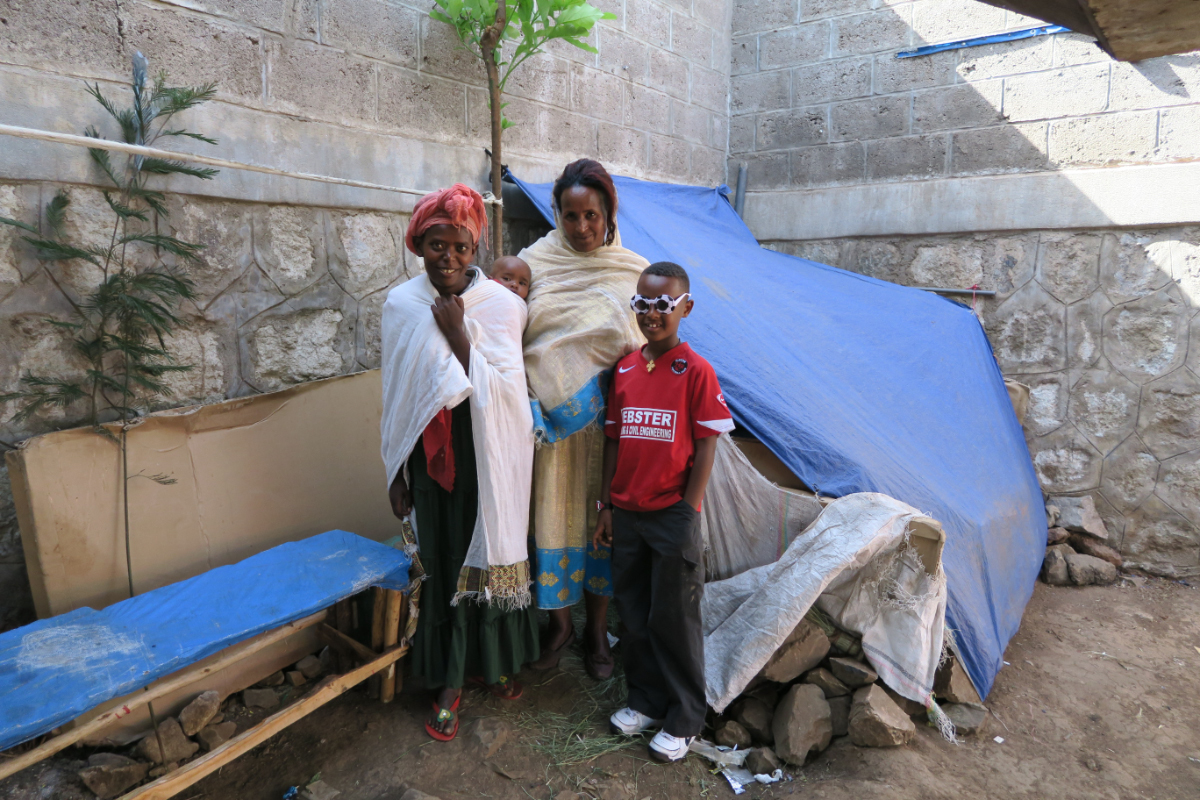 Seble is always keen to meet us on the pedestrian bridge over the ring road whenever we visit and on this occasion she greeted a young mother waiting at the bottom of the steps hoping for the generosity of strangers. As we passed by the young mother called out something in Amharic. Seble smiled and said “She’s asking that I tell you her story”. Her name is Handana. She used to live with family but became a Christian and for this reason she was made to leave the family home. She now lives beneath the road bridge under a tarpaulin with her sick husband, five year old son and baby girl. Seble has helped by passing on her own children’s out grown clothing, or by taking Handana some injera if she had some spare.
 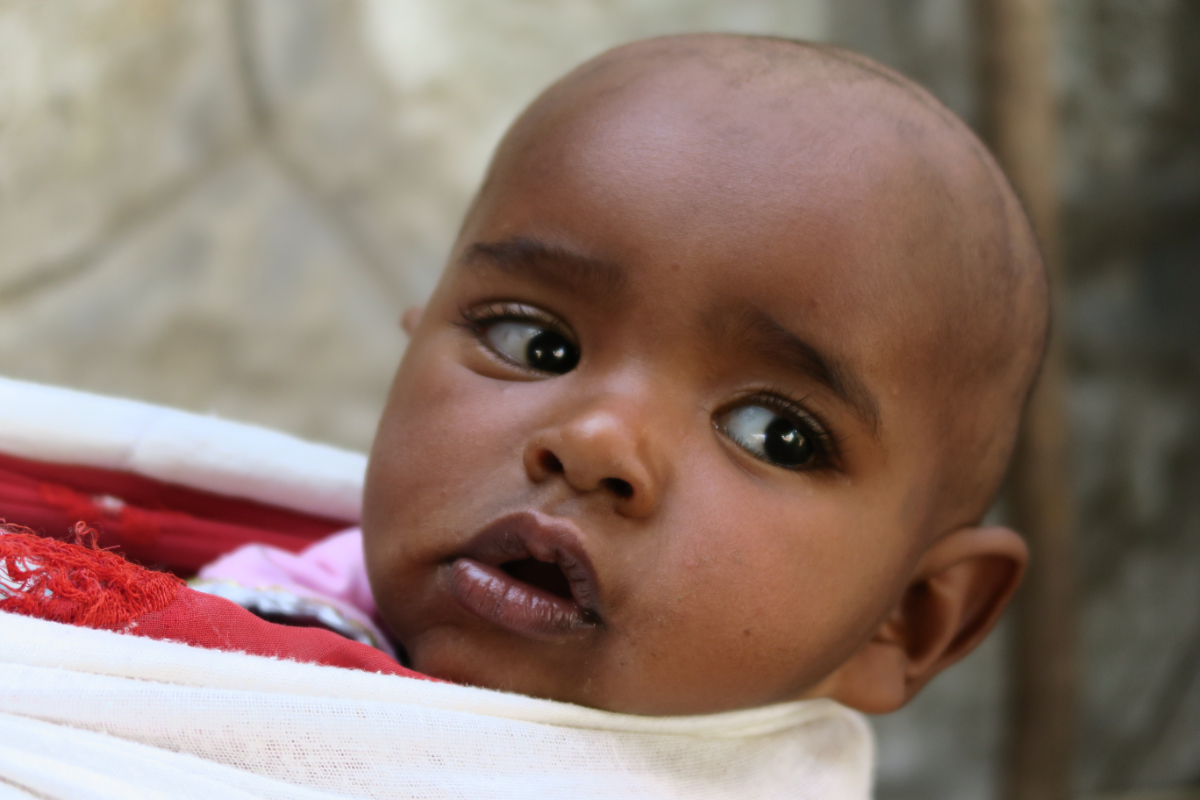 On our route back we took a short detour to look beneath the bridge where Handana was waiting with her baby strapped to her back. She posed for a photo with Seble and we left her a gift. It was only when we looked at the photograph more closely later that we noticed that in traditional style had laid grass at the entrance to her tarpaulin.
Comments
Aaron G (not verified)
Sun, 12/04/2015 - 23:56
Permalink
Fasting
Another fast? Has the other one finished yet? Is all the meat trading happening because they have been fasting? Amazing to hear that young mum's story.
Bethany (not verified)
Tue, 14/04/2015 - 17:48
Permalink
Handana
Handana is an inspiration. I shall be praying for her, her husband and children.
I am always amazed by the number of fasts and half-fasts that go on in Ethiopia, it's terribly confusing!