Consequences
 On 31st January 2000 a jury found Dr Harold Frederick Shipman (A 54 year old GP practising in the north of England) guilty of the murder of 15 of his patients. He was sentenced to life imprisonment and is the only British doctor ever convicted of murdering his own patients. The subsequent Shipman Inquiry by Dame Janet Smith suggested Shipman was probably responsible for around 250 deaths between 1971 and 1998, making him one of the most notorious serial killers in recorded history. Shipman committed suicide in his prison cell by hanging himself with his bed sheets on 13th January 2004. He never said a word to explain his killings - we will never know why he did what he did.
The repercussions of the Shipman case and inquiry affected every doctor, hospital and GP surgery in the UK in an attempt to ensure this could never happen again. For a GP like me (in the middle of my career when this happened) it altered how I studied; how I practised; how I treated my patients; how I signed death and cremation certificates; how I recorded my day to day consultations; and how I was registered with the General Medical Council (GMC). The regulatory framework for doctors now assumes everyone is capable of being another Dr Shipman - until proven otherwise by annual appraisals, peer review, and “revalidation” by the GMC every 5 years to confirm the doctor is competent and safe. When revalidated successfully the doctor is granted a 5 year “licence to practise” by the GMC – all doctors have to be registered with the GMC but only those with a licence to practise can actually see and treat patients in the UK.
I doubt anyone involved in the Shipman Inquiry recommendations and the subsequent reform of the GMC ever thought there would be consequences for the health of a few people in Ethiopia.
I no longer have a licence to practise in the UK. The way the system has been set up renders it impossible for British doctors working long term overseas. I surrendered my licence last August as there was no way to keep it - I won’t bore you with the details as to why. I am however still registered with the GMC, and I am licensed to practise in Ethiopia by the Ethiopian Ministry of Health (I have a legal Ethiopian document with my photo on covered in legal stamps that legally has to be displayed on my clinic wall).
I have several patients here suffering with conditions for which treatment is not available in Ethiopia - severe depression and non-cancerous prostate disease are the main ones right now. With a licence to practise in the UK I would have been able to buy their medication from a UK pharmacy and bring it with me to keep my patients treated. Without a licence I cannot prescribe to patients in the UK so my requests to purchase medication while in the UK to bring to my patients in Addis are being declined. Before Shipman there wouldn’t have been a problem.
So unless I can find an alternative way to obtain these medicines, three men I care for here are at risk of unnecessary prostate surgery (which in the Ethiopian healthcare setting can be very dangerous) and one woman may relapse into her severe post-traumatic catatonic depression.
And all thanks to Dr Shipman.
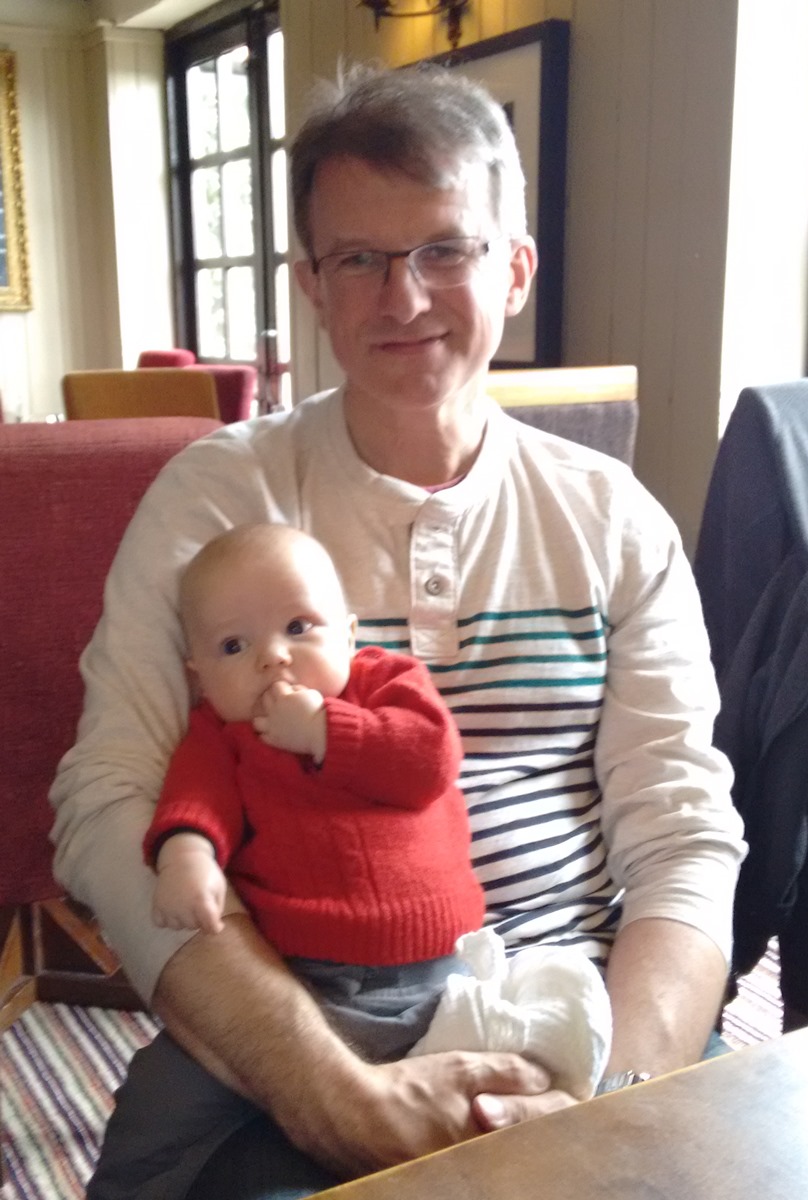 (Footnote: This problem came to light two weekends ago when I tried to buy the medication while on a brief three day trip to the UK, ostensibly to do some postgraduate education at the BMA in London. I did the excellent 2 day intensive “GP Masterclass” of course, but the real (secret) reason was to collect my Microsoft Surface Pro 3 tablet computer which had been sent back to the UK for repairs to a cracked screen. Briefly playing with Natalia and Isaac could also have been an influence…)
Comments
Bethany (not verified)
Sat, 14/03/2015 - 21:14
Permalink
shocking
I wonder if Shipman knew the full consequences of his actions. I wonder if he knew how far and wide this would reach. I doubt it.
Aaron (not verified)
Sun, 15/03/2015 - 16:32
Permalink
Depression
Depression is a fairly hot topic at the moment. It seems more and more people are depressed and having issues with anxiety. It will be interesting to chat to you about it to see how much of it you see in Ethiopia. Love the picture with Isaac :-)
Jenny (not verified)
Mon, 16/03/2015 - 11:21
Permalink
Our trust in others......
You make such an interesting point Phil - having just been through a Care Quality Commission inspection at the Practice! It is difficult for me to comprehend that you don't have a UK medical licence now - an excellent GP with years of experience and expertise, and in whom I would entrust my life. However, we work to a worst case scenario to protect people from the less scrupulous and dangerous. Our inspection took many hours of doctors time away from seeing patients and many hours of manager time away from setting up new services (still need to implement inline prescription requesting :-() you can imagine the unrest at having to provide evidence of curtain cleaning schedules and hand washing training - some of the basics that everyone does as common sense. However, these inspections across the country have put some surgeries into special measures - receptionists issuing prescriptions at their own discretion, maggots due to uncleanliness - these were rare and exceptional but not acceptable. There is a sensible middle-ground somewhere. I'm sorry to hear your patients are suffering - I'm sure they would be delighted to have the healthcare we are given - even if there is no curtain cleaning schedule! All the best.
Phil
Mon, 16/03/2015 - 14:48
Permalink
No curtains here!
I'm all in favour of ensuring quality in healthcare settings but the UK has taken risk-aversion to a new level. The way to avoid having to launder curtains is to not have any. Privacy? Pah! My Ethiopian patients couldn't care less and bare their chests with complete abandon and always decline a chaperone because I'm a doctor for goodness sake! However closing the door I do insist on...
As you will remember Jenny the curtain thing always amused me hugely. What is the risk? How do the bugs get on the curtains? Are some rogue GPs mopping up pus with their couch curtains? Are some patients rolling in them to catch ghastly infections? Or are bugs flying around in the room in their billions while the curtains are being pulled? I'd love to do a double blind randomised controlled trial of curtain laundering, but what would I be looking for? I can't find any information about what particular infections are transmitted by curtains!
Tony (not verified)
Sun, 22/03/2015 - 08:44
Permalink
Doors
Actually it might be more hygienic to remove the doors...how many times have I witnessed patients who have fiddled with bits of their anatomy, declined the opportunity to wash their hands and then used the door handle on the way out...or even worse offered the same hand as a gesture of friendship in a warm handshake at the end of the consultation...and don't get me started on the urine specimen farce!
Jenny (not verified)
Mon, 16/03/2015 - 16:39
Permalink
Curtainitis
You've obviously not come across the horrible symptoms of curtainitis - I went to my doctor and said "Doctor, Doctor, I feel like a pair of curtains". He said "Pull yourself together!". The oldies are the best....
Phil
Mon, 16/03/2015 - 18:50
Permalink
(No subject)