A Tale of Two Cases
(I have permission from all the people involved in these cases to share their stories on my website.)
 Fekadu
Several years ago Fekadu and his family had been living in very poor circumstances - until he was employed by SIM Ethiopia. Although the wages are low he has been able to support his wife and two children, doing a job that involves being on his feet all day.
I had seen Fekadu walk up the stairs to the clinic, and he was struggling. He clearly had a lot of pain in his right ankle. He came and told me that 20 years ago he had broken his ankle in an accident and now it was stiff, painful and getting worse. After reviewing his medical record, examining him and getting an x-ray it was obvious he needed his ankle replaced or fused. A year or so ago he had been offered a fusion by a local orthopaedic hospital but he had not pursued it – because he couldn’t afford it. Now things were getting desperate. Fekadu was afraid the pain would get so bad he would be unable to continue his work. If he lost his job he would slide back into the poverty he had managed to leave. As Tigist and I sat and discussed the situation with him he sat staring at the floor in a fog of hopelessness. A tear trickled down his cheek. SIM provides some funds for medical care for all employees, but nowhere near as much as Fekadu’s operation would cost. He would also need three months sick leave for the fused ankle to heal (a joint replacement is out of the question) and he wouldn’t get enough sick pay. His wife and two teenaged children depend on him, and he couldn’t see a way out.
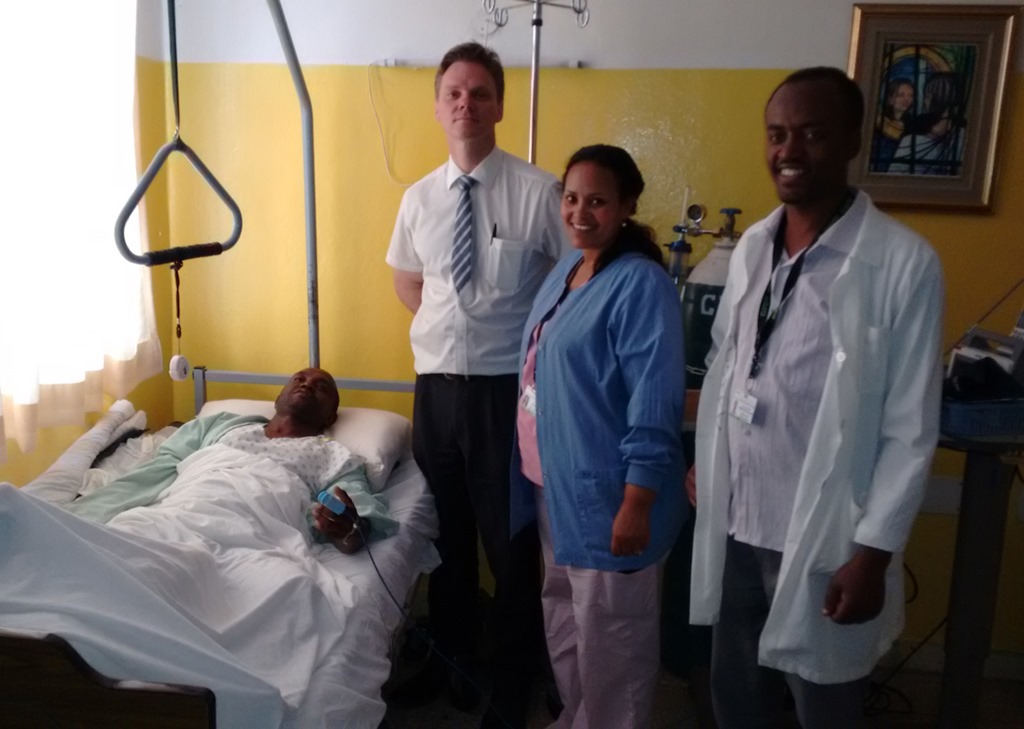 The CURE Hospital in Addis Ababa is designed to use the income generated from full fee-paying patients to provide free operations for very needy local people, especially children. They provide the best orthopaedic care in the country (the fact that the two chief consultant surgeons are from the UK doesn’t influence my assessment one whit…) and agreed to see Fekadu to help decide how to proceed. It was felt the operation was possible but would cost roughly 20 times Fekadu’s monthly take-home pay. (Imagine – if you earn say £2000 per month being faced with a medical bill of £40,000.) Having this done in the UK would cost the NHS around three times the fee at CURE.
During our trip to the UK at Christmas I had mentioned Fekadu and his situation to a couple of folks at Spicer Street Church. Great generosity from the church in general and our wonderfully supportive home group in particular (including a car boot sale) has resulted in the whole cost being covered. Fekadu has had his operation and is back 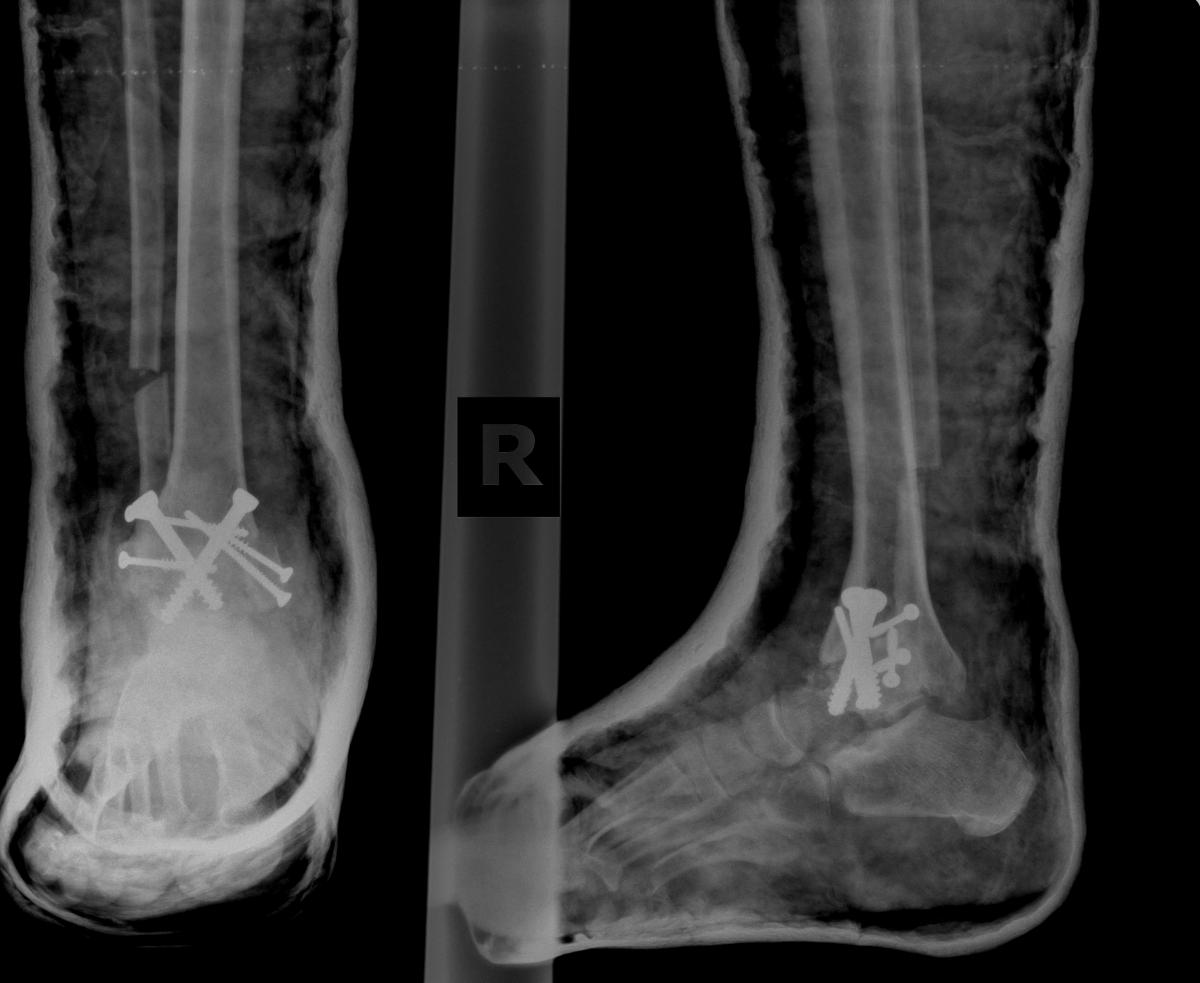 home with his family recovering. With the money raised we can top up his pay so he doesn’t go short, and within three months he should be back at work and out of pain.
As we raised all the money for Fekadu CURE has been able to do another operation on a 28 year old Ethiopian with a severely deformed foot free of charge.
Enatnesh
Procreation appears to be a national sport here, judging by family sizes. And it appears to have affected the ex-pat population. Last night we were privileged to attend a pre-wedding celebration for a couple soon to be married in the USA, and I was aware of four pregnancies amongst the 100 or so guests. Several months ago I had had the pleasure of telling Enatnesh and her husband that her second pregnancy was in fact twins. They were thrilled. I did much of her antenatal care until she registered at a local clinic for delivery planning. A few weeks ago a friend reported to me that Enatnesh’s ankles were swollen. I asked her to come and see me, and sure enough she had swollen ankles – and a lot of protein in her urine (all the doctors reading this just went “uh-oh…”). Her blood pressure was normal (the doctors just said “phew!”) but I sent her off to her obstetrician clutching a hastily written letter expressing my concern. The obstetrician behaved pretty sensibly, although I had to persuade him to consider sending Enatnesh to a unit where they had neonatal intensive care, rather than deliver her at his hospital and transport two very tiny babies somewhere else. he told me the babies were growing normally which was a relief.
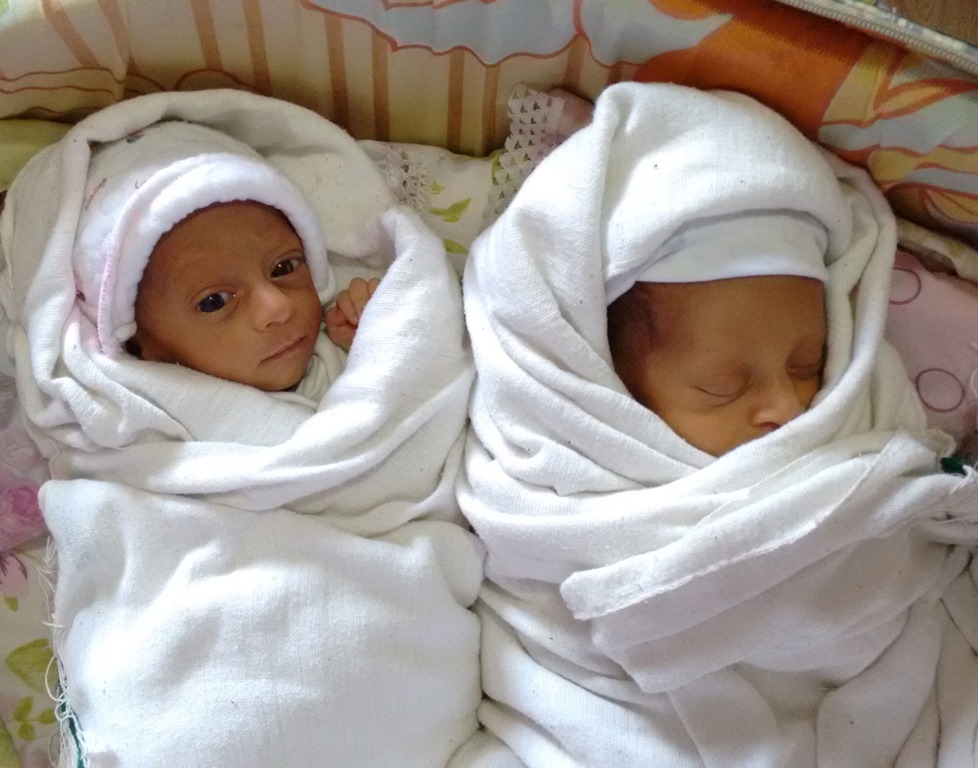 Enatnesh was around 32 weeks, and became very ill very quickly. Her blood pressure shot up, she began to have difficulty breathing and was losing a lot of protein. She needed urgent delivery, but at this point, in the middle of the night, the obstetrician decided he couldn’t cope with her any more and refused to attend. An ex-Bingham teacher and her husband ended up taking Enatnesh to another hospital that had two intensive care cots available where Hasset and Israel were delivered by Caesarean section – weighing 700 grams and 1000 grams respectively (so no, Mr Obstetrician, their growth was certainly not normal). Miraculously neither baby needed ventilating, and after a couple of days of IV fluids and nasal tube feeding they both began breast-feeding and growing. Enatnesh recovered well and her blood pressure rapidly came back to normal. Three weeks later they were discharged home.
After a few days wearing my British GP hat and with a big dollop of naïveté I decided to do a home visit before heading off to a meeting at church. I took my nurse Tigist with me partly to give her a lift home (it takes her 2 hours in minibus taxis sometimes) and partly to ensure 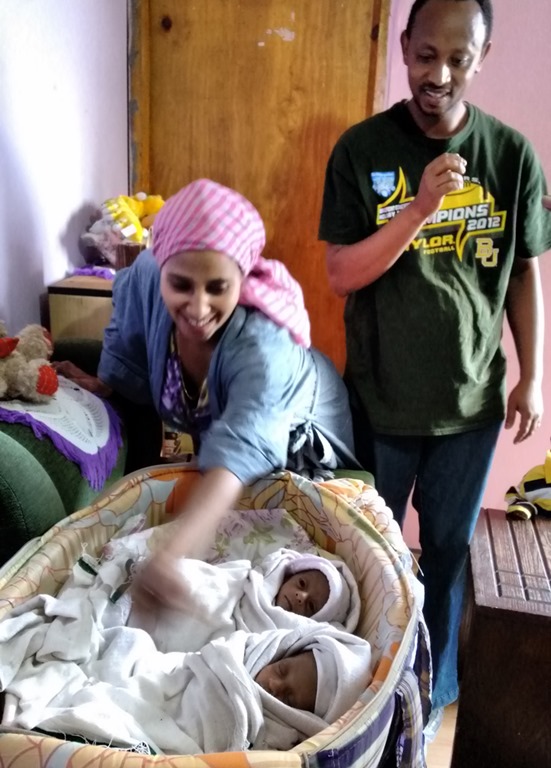 good communication with Enatnesh. Naïve, because I should have known better than to assume I could do a home visit on a pair of preterm twins in 40 minutes. Clutching my on-call bag and a pair of baby weighing scales Tigist and I squeezed into Enatnesh’s tiny sitting room, and she proudly brought a basket out of the bedroom in which were these two tiny tots. it was all very straightforward, apart from Tigist going all gooey over the babies. Enatnesh is extremely well and breast-feeding them both. They are growing, but need topping up with pre-term formula as advised by the hospital outpatient clinic they had attended the day before. (They had carried these two vulnerable little folks to the hospital in their basket half way across the city in a taxi).
But as we were examining the babies, out came a stool. Then coffee cups. Then a plate of injera. Then some meat “wat”. By now I know I definitely won’t be getting to the church meeting – visit an Ethiopian household and you will be royally entertained. So once we had packed the babies away and checked Enatnesh, we ate, and we drank freshly roasted, freshly ground and brewed coffee heated over charcoal amidst the smell of burning incense. Two hours after arriving, we left.
Home visits were rarely like this in the UK.
Comments
Elisabeth (not verified)
Sun, 07/06/2015 - 20:40
Permalink
Wow - what wonderful stories
Wow - what wonderful stories of how God has used you to bless and help others. Amazing. God bless you xx
Alan (not verified)
Sun, 07/06/2015 - 21:07
Permalink
twins
Amazing story
Murray Willows (not verified)
Mon, 08/06/2015 - 10:41
Permalink
Great news!!
Great to hear that Fekadu is doing well and is recovering at home. Also good to hear the twins are OK and progressing!
Paul G (not verified)
Mon, 08/06/2015 - 20:34
Permalink
Heart-warming
Good to hear some heart-warming news of human kindness and God's blessing - something to balance the current news of spine-chilling cruelty elsewhere and human greed a bit closer to home at FIFA. Good also to hear of generosity from our friends at SpSt. - good on yer St Albans!
Bethany (not verified)
Tue, 16/06/2015 - 20:40
Permalink
Great!
I shared the home-visit story briefly in homegroup on Tuesday. Delighted to hear the little ones are doing well.
Fedaku's story has also filled me with joy :)