One Evening, Two Cultures
 It all started with a tree branch broken by a storm that blocked the road adjacent to the Bingham perimeter wall last weekend. A tree guy was summoned and the electricity department alerted. There was a danger that when the branch was removed it could fall on the electricity wires. The tree guy did his part, the branch descended onto the wires and sparks flew (the electricity department hadn’t heeded the warning), but amazingly the wires survived. But within a very short while the whole branch been ferreted away somewhere.
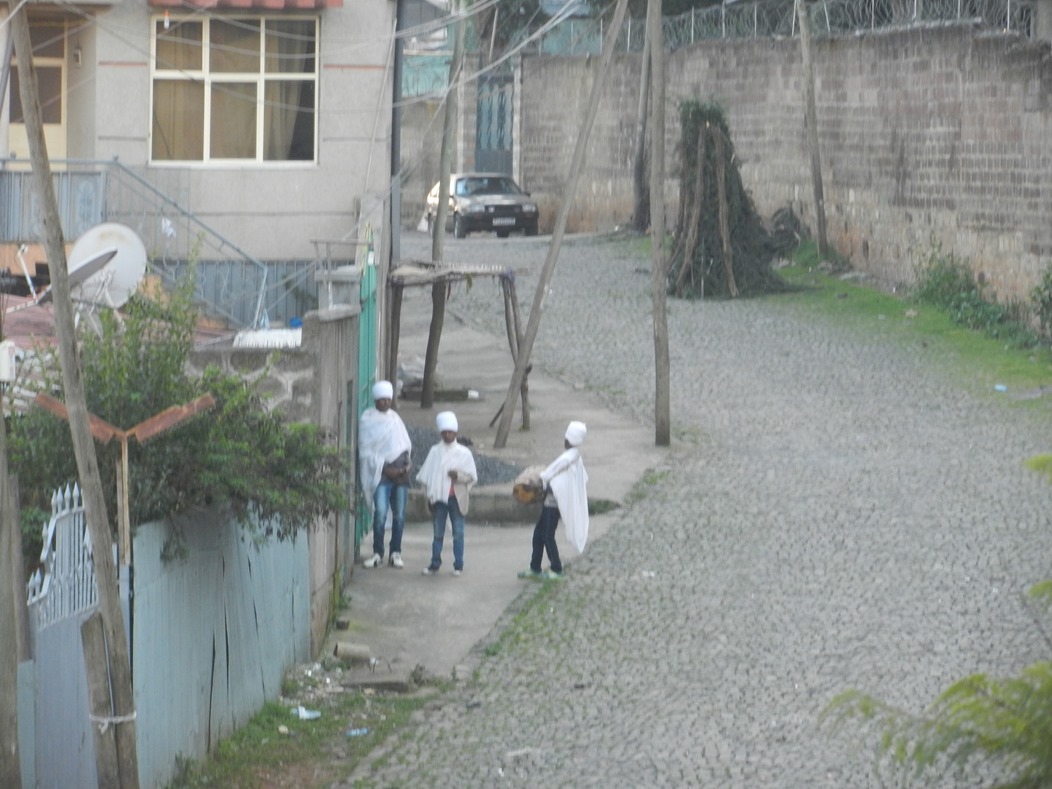 The prediction of possible trouble during the Tuesday evening Ethiopian Meskel celebrations resulted in us having a half day. I was working at home and very distracted by the view from our window, the branch reappeared cut into similar lengths and was now being assembled as a ‘chibo’ (a narrow pyramid of wood for burning). Two young men spent a couple of hours trying to erect the chibo with it falling one way then the other - it was taller than them. I didn’t see it lit, as I had another cultural experience to attend.
There are a number of Indian business families living in Addis who have been here for four generations. The daughter of one such family is in my class, so along with three others I attended the ‘children’s evening’ of a nine-day festival called Navratri, during which nine different forms of the Goddess Durga are remembered.
We were picked up by the father of my pupil who himself speaks four languages fluently (Hindi, Gujarati, Amharic and English). This was fortunate because as we drove closer to the centre of Addis where the venue (which was an Indian school building) was located, it became apparent that most of the roads were blocked by Meskel fires and celebrations. Our host enquired of guards and passers-by in Amharic, switching to an Indian language to find out from various relatives where we might travel. One such individual rescued us when the car became completely hemmed in and led us on foot. No wonder we had difficulties - one of the largest Meskel fires I saw was blazing brightly right outside the compound gates, complete with loud speaker, music and comperes. The crowd we now negotiated were mostly clad in white and clapping along to the music, many swaying as they did so.
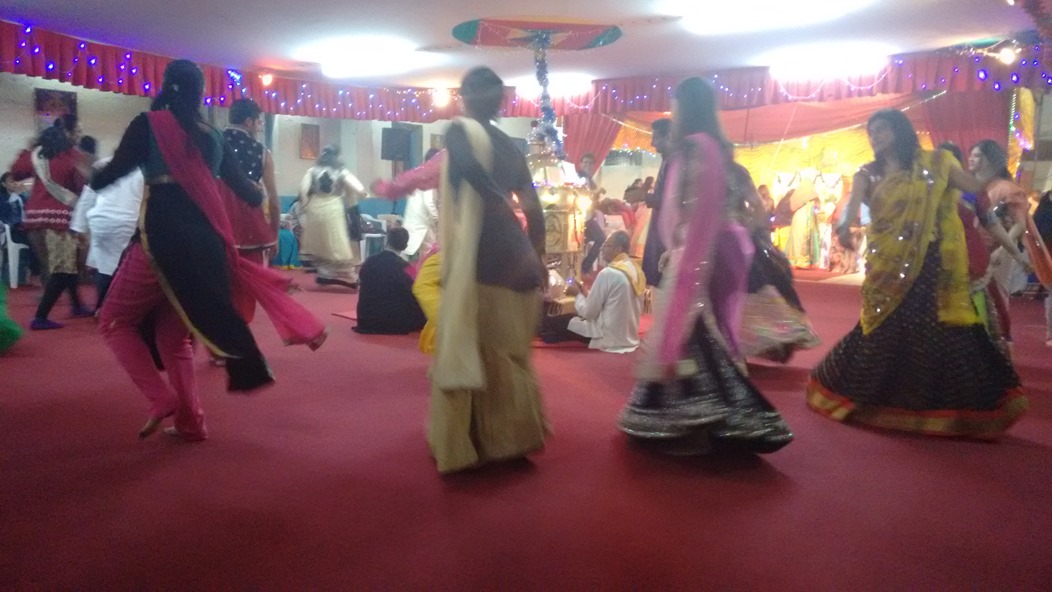 In contrast the large hall we entered in the Indian school was a riot of colour. Each of the ladies were resplendent in colourful outfits with sequins, silver embroidery and jewellery. The whole community was very hospitable, coming over frequently to check that we were enjoying ourselves and encouraging us to join in with the dancing. I tried the slow initial dance and a stick dance later. A good choice as it turned out, because some of the dances were fast and furious. The main event consisted of little cameo parts for each of the children, which was very cute. It culminated in an Indian song performed very competently by one of the Bingham High schoolers. Pizza was served at 10.45pm along with spicy milky tea.
As we emerged late onto the street where the Ethiopian celebration had been taking place earlier, there was little sign that it had even happened. Cultural memories had been created in two very diverse communities and I was privileged to witness both in one night.
Comments
Bethany (not verified)
Thu, 05/10/2017 - 07:39
Permalink
Contrast
What a contrast of cultures both going about things in their own way. Fascinating!
Tanvi Patil (not verified)
Thu, 04/01/2018 - 15:01
Permalink
Awesome story...
Hello Chris,
This is Tanvi. I am a writer at Nashikites.com
The story you posted is awesome... Its great you loved India and its culture...
Keep up the good work!