Them Dry Bones
 Our guide in the astonishing town of Lalibela had promised us a free African massage, and we were now getting it. Bouncing along a rough partially made road in a Toyota van I felt, well, massaged. Chris next to me; Beth and Paul behind, the arid countryside of parched grey earth, scattered acacia trees and primitive farming rushed by backed by truly spectacular mountain scenery.
We’re in the north of Ethiopia, hundreds of miles from Addis Ababa, and we’re on our way to visit the Yemrehanna Kristos church and monastery some 40 km north east from Lalibela.
Arriving at a small settlement we left our free massage van and climbed up a gully on a well-made path. Past a disused straw-thatched tukul labelled “Ticket Office” to a man sitting on the wall under a tree who exchanged a quite ridiculous amount of money (in Ethiopian terms) for a flimsy hand-written receipt which was our ticket. Up we go, struggling a bit for breath in the thin mountain air (we’re 2600 m above sea level) until we approach a wide cave in the mountainside; the only way in is through a guarded gate in an ugly breeze-block wall. 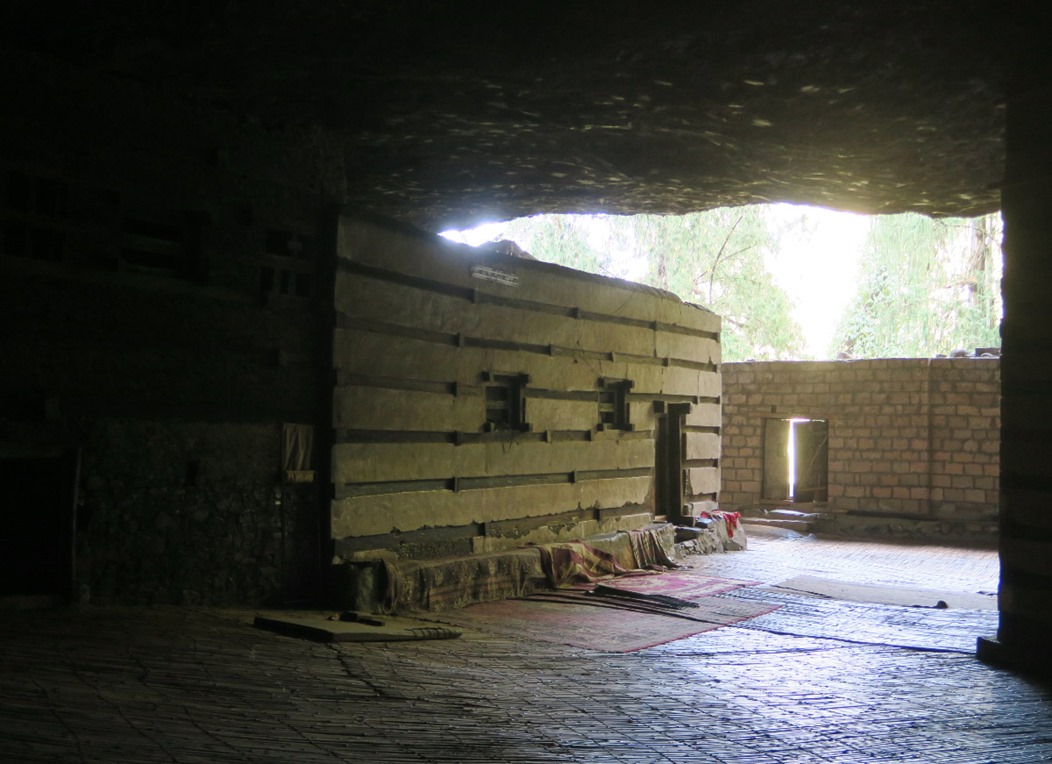 Relieved of our shoes, we enter a gloomy cave to be confronted by an extraordinary pair of buildings – on the left a church; on the right a monastery. Around 900 years old, these wood and stone constructions stand on olive wood slabs to keep them afloat on the marshy ground underneath. Several things make it obvious we are at a holy Ethiopian Orthodox site: we have no shoes; there are crosses in the windows; and a white-turbaned robe-swathed priest emerges from one of the doors.
We walk into the cave around the left side of the church. There’s a cloth-covered tomb - reputedly that of Yemrehanna Kristos himself. We progress further behind the buildings into the gloom. Behind a wire fence and stretching out into the darkness of the back of this musty cave is one of the most extraordinary things I have ever seen … the dried, desiccated bodies and bones of 5,000 or so people.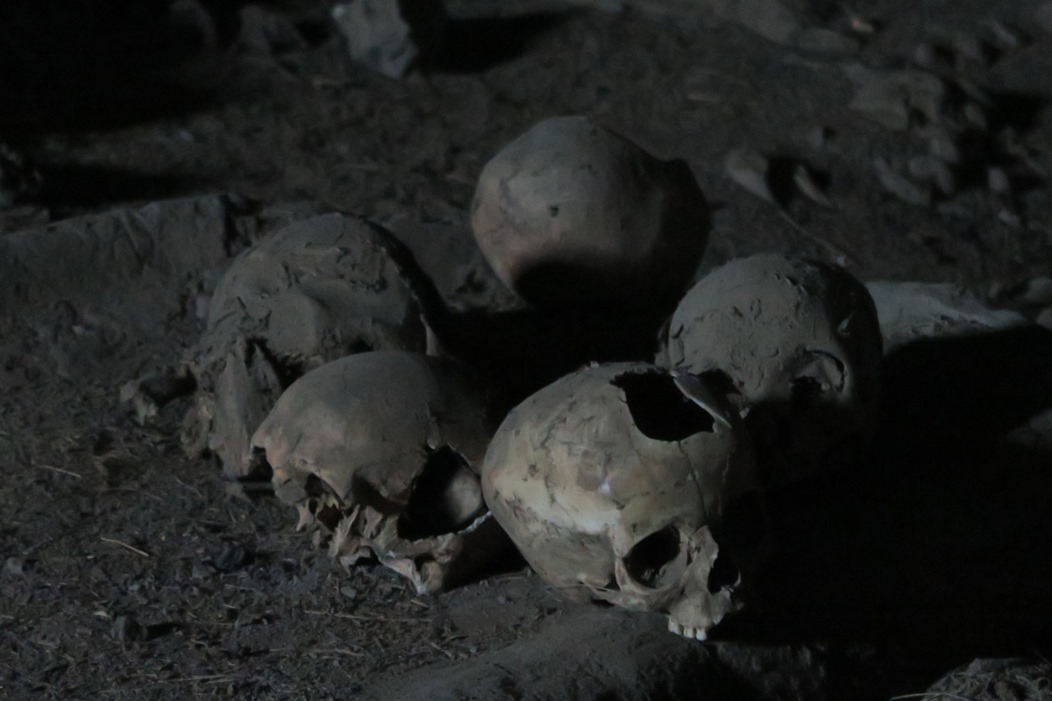 (Reputedly - we didn’t count them; the bones were all muddled up and CSI would need years to sort all this out.) These were the remains of pilgrims who came here to die, and possibly the bodies of some of the people who did the building. All the bones have been here at least 500 years.
The priest took us into the church. Emerging impressively from behind a curtain clutching a huge metal cross he posed for a picture, and proceeded to tell me about all the dental treatment he needs. The carpeted and decorated dim interior was full of symbolism and Orthodox history and myth.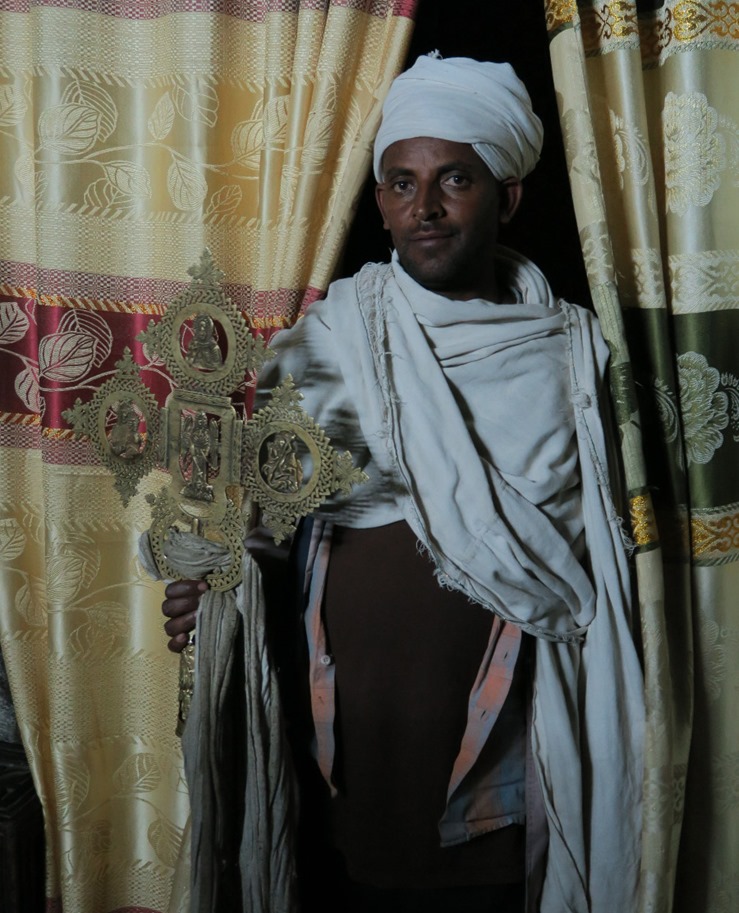 I could imagine the place full of swaying, chanting priests with sistrums and prayer sticks preparing for mass in a ritual little changed for centuries; the smoke of incense filling the air.
Having paid our dues to the priest and the guard (literally), and once reunited with our shoes we left the cave with our memories of an amazing visit. Except for Paul, who along with his memories was accompanied by a considerable number of fleas on his shoes and legs which were rapidly brushed off by our attentive guide. Ironically of all of us Paul had the fewest flea bites the next day. Guess who had the most…
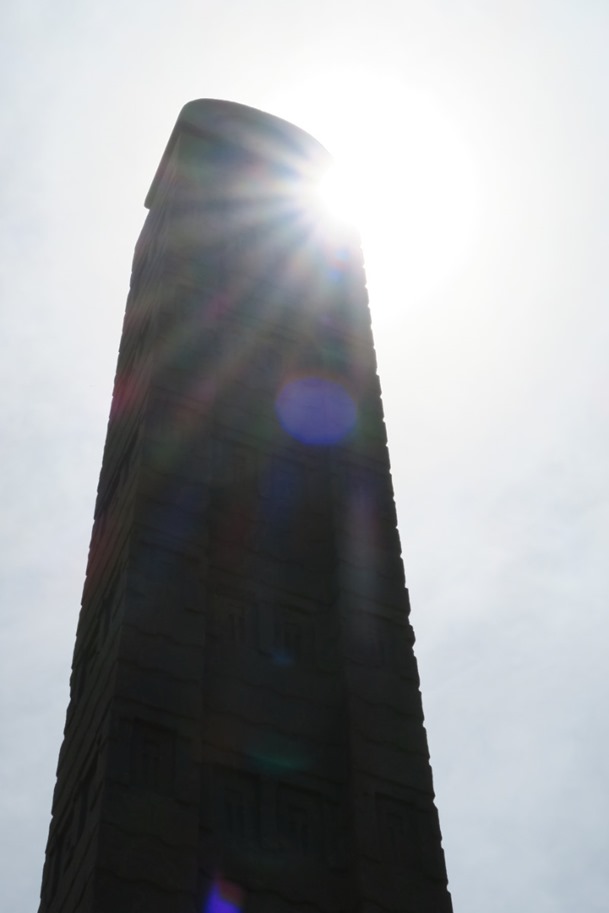
This was the third day of our four-day whirlwind tour with Beth and Paul of three of Ethiopia’s most significant historical sites – the 16th century castles of Gonder (Paul was most disappointed not to see any orcs), the 4th century mysterious obelisks of Aksum (barely 50 miles from Eritrea), and the 12th century rock-hewn churches of Lalibela. Throughout the trip myth and mystery merged imperceptibly with vague and sometime contradictory historical facts creating an atmosphere of wonder and intrigue. Who erected these granite obelisks weighing hundreds of tons and how did they do it 1600 years ago? Who carved these 11 churches in Lalibela out of the virgin rock, and how long did it take? Which kings inhabited those castles, and what battles were fought there? And above all, secreted away in Aksum in the little chapel of St Mary of Zion, does the Orthodox church really have the original Ark of the Covenant made by Moses in the shadow of Mount Sinai 3,500 years ago? Fact or fiction, truth or myth – 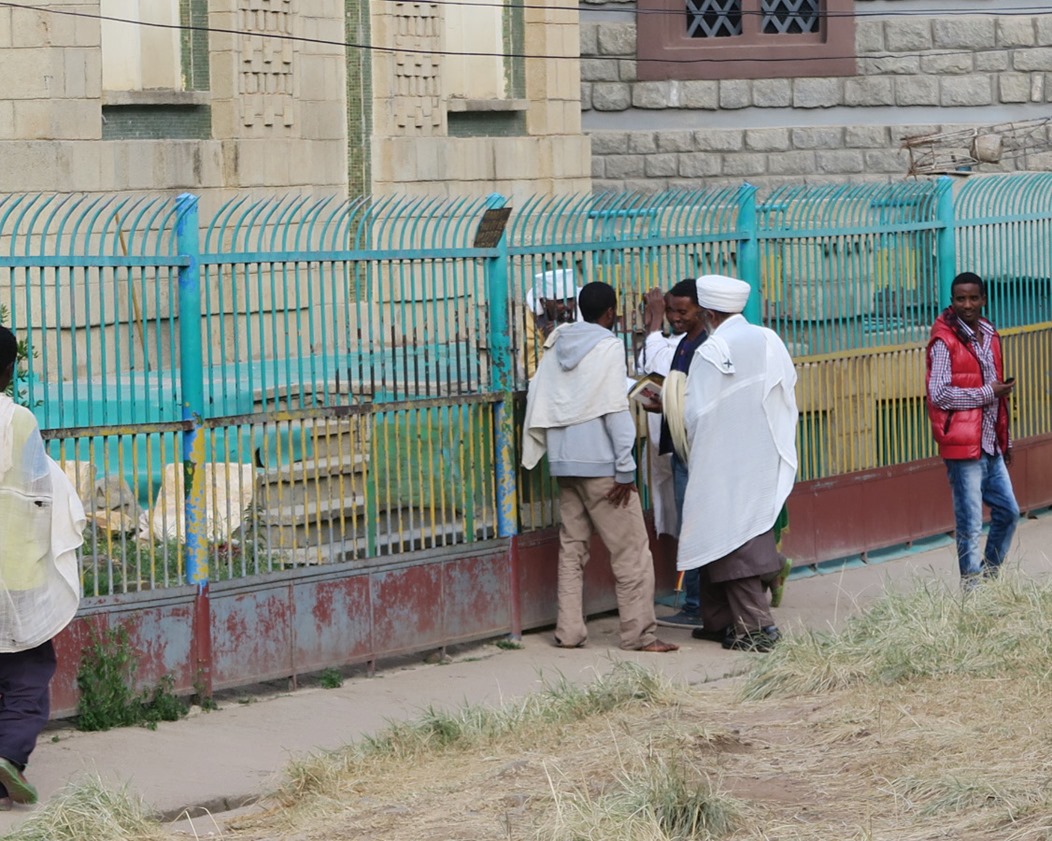 Orthodox Christians demonstrate a pure devotion and faith towards this relic that is spellbinding. Especially the guardian of the Ark – he lives in the chapel, never coming out until he either dies or is too ill to stay there. He is the only one who is allowed to see whatever is in the chapel. The last guardian was in there for a continuous 30 years. I accidentally took a picture of the current guardian inside the blue fence talking to some folks on the outside.
Beth and Paul’s visit gave us an opportunity to go to see some truly remarkable and unique aspects of Ethiopian history and culture. There’s a gallery of the best photos I took. Here’s a short video of a gorge 90 minutes drive north of Addis Ababa – check out the baboons scared by my drone. it’s short because I had to land it to get it away from dive-bombing yellow-billed kites!
Comments
Elisabeth (not verified)
Tue, 03/11/2015 - 20:05
Permalink
Thank you for sharing such
Thank you for sharing such lovely photographs - it looks like you all had a wonderful time. Such beautiful scenery and interesting history. Glad to see the copter thingy is working ok after its little crash!
Love to you both
Lizzy xx
Jenny (not verified)
Tue, 03/11/2015 - 21:36
Permalink
Amazing adventure
What an amazing time together getting to see people and places that are far off the beaten track. Rather frustrating that only the guardian has access to the contents of the chapel...... As for the drone, I can now see its true potential giving us all an insight into that vast scenery. Looks a truly special place and lovely you got to share it together. All the best to you all.
Dick Bell (not verified)
Wed, 04/11/2015 - 12:14
Permalink
I love your piccies. I almost
I love your piccies. I almost belong there. And I love your kids. How wonderful to see Bethany and Paul again. My love to them. I certainly know a lot more about Ethiopia than I ever did before.
Paul G (not verified)
Fri, 06/11/2015 - 14:52
Permalink
Building from the inside
Quite remarkable to look at the structure of the stone church. Constructing a church from the outside is difficult enough for most architects - I can't begin to imagine the skills required to build a huge church from within a rock.