Fifteen Days
 What is it with fifteen days? Almost every time I ask an Ethiopian patient how long they’ve had a particular symptom it is “fifteen days”. Never two weeks. This happened to me recently when Sister Ankatse was interpreting for me, and after we’d dealt with the fifteen day tummy ache problem and the patient had left, I mentioned this to her. She didn’t know why either. She brought in the next patient. They had a cough. “How long?” “Fifteen days”. Ankatse and I share a brief sidelong glance. Being a pair of consummate professionals, neither of us smiles.
(Warning: if any of my new American friends are reading this please don’t be offended by the next paragraph. I am using irony, hyperbole, exaggeration and generally very British humour. I promise there is no insulting going on and I think y’all are awesome.)
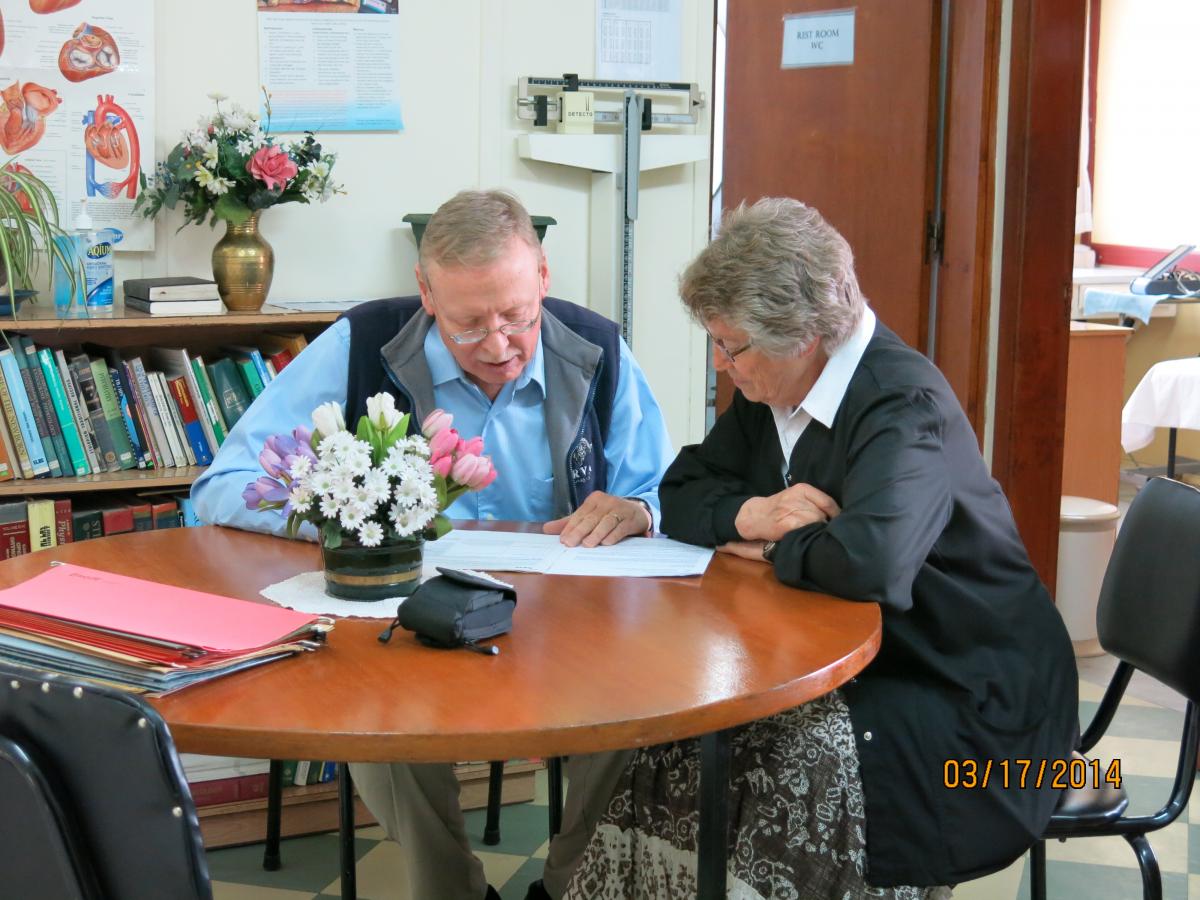 The differences between consulting here and consulting in British general practice are becoming more obvious the longer I’m here, and now I’m adapting. I see not a few foreigners. The easiest are the British – we understand each other well from the outset – they know how I am likely to behave and I know what they are likely to expect. The new Zealanders and the Australians work in a similar way to the British as the place in their home health services for GPs is similar. Canadians understand our system a bit as well, but oh dear the Americans! They’re not used to having a GP form the hub of their healthcare and so tend to take things into their own hands a fair bit. Not only with the expectation of excessive high-tech investigations (“I went and had a CT and an MRI scan of my head because I had a headache for a week and hey look they were both normal!”) but sometimes with prescription medication (“I had diarrhea for three days so I took Cipro, Flagyl, Bactrim and Albenza and hey a week later I still have diarrhea!”). As you might have noticed trade names for drugs are de facto for folks from the US (big triumph for “Big Pharma”), but as generic names are de facto for me if the internet is down finding out what exactly they have taken can be a challenge (“I need more of my Twynsta 40/10 pills – where can I get them?”). There is a fundamental lack of trust of generics (“Is diphenhydramine really as good as Benadryl??”) and great, if rather incongruous, faith in Imperial units for things (“I weigh 207 pounds and my temperature is 98.8…”) This has driven me to considering writing a computer program to help me cope. One really good thing though is that I find out who the specialists in Addis are, because US folks seek them out and consult with them before seeing me (“My proctologist has a clinic down Bole Road – he’s so good he even warms his gloves up…”)
But the biggest difference is with Ethiopians. Learning about, understanding and working within a completely different culture is a real challenge and as most of the people I see are Ethiopian and most need a translator (although sometimes their English is astoundingly good) I’m on a really steep learning curve. Let me give you a few general examples, although bear in mind all of this is based on real people I have seen. Any GPs reading this will grasp just how difficult I’m finding this – overturning 29 years’ experience of consultation behaviour is not easy!
|
|
Ethiopia |
England |
Comments |
|
Patient staggers in obviously distressed and in pain. I ask: “How are you?” |
Patient shakes my hand and/or bows to me and tells me several times over and in several ways that they are fine and very well, praise God, and asks how I am? |
Patient immediately tells me how awful they feel and may possibly burst into tears (this tends to be a bit sex-dependent though…) |
In England if the patient is coming to tell me about their cough I will often hear them practicing their cough on the way down the corridor… |
|
History |
It is quite possible they will not tell me what’s wrong with them this time. That may happen next time they see me. There will be minimal eye contact whatever. I’ll get a history of something, but there may be a lot of surprise at the number of questions I ask. |
I’ve got most of the history by now – they’ve already started. Eye contact may be minimal if they want to communicate how bad they feel. There may be a link between the amount I ask and the score I get for being a caring doctor on the post-consultation quality questionnaire. |
Much of the “care” my Ethiopian patients have experienced before will have been very brief, with no explanation or diagnosis and always some treatment, often by injection. They have come to expect that if they bring me a problem there will always be a solution. |
|
Age – “how old are you?” |
Very few Ethiopian patients are ever asked this and very few know when they were born. Some will work it out based on the age they thought they might be when they had their first child. Some just guess. When they see me next time they may be a few years older or younger. My oldest patient told me she was 50. I don’t think so! |
No need to ask – it’s on the top right hand corner of the screen of course. |
I’m using paper notes here for now. I’m going to have to do some inspired guess work around age when I come to computerise the records. |
|
Timescales |
“Fifteen days” probably. Although now I understand some Amharic I can hear the translator firing direct questions – “1 month? 3 months? 1 year? 15 days?...” |
I’ll get accurate timings usually, sometimes from an app on their iPhone dug out from under the sheaf of paper containing all the Internet research they have done. |
The Ethiopian culture is a “now”, “survival” culture. Timescales are less relevant and therefore often not remembered. There is a problem now. |
|
Examination |
Although they may have rarely been examined by a doctor before, there is little coyness here. Sometimes they will begin taking off the wrong bit of clothing. Sometimes they will expose themselves somewhat alarmingly. They won’t put their feet on the couch with shoes on though. |
This is expected but can be accompanied by a lot of embarrassment. On occasion a request to examine their chest will result in pulling apart the material between 2 buttons leaving a 2 inch diamond of chest exposed, barely bigger than the stethoscope head. |
My oldest patient is typical of many older Ethiopians who have a great fear of the adverse health effects of cold air. Last time I saw her she had six layers of clothing on which made a chest examination remarkably difficult. Bear in mind we are 9 degrees north of the equator in the tropics! |
|
Assessment |
The disappointment is palpable if I don’t immediately say what’s wrong. Even though they will sometimes feel they know what’s wrong, they’ll not tell me that. Not this time at least. |
Explain findings. Discuss. Answer questions. What exactly did Prof Google say was wrong? Explain why a viral illness is more likely than pulmonary aspergillosis in the UK. |
Ethiopian health workers will rarely tell a patient what’s wrong, what the treatment does or what the investigations are intended to achieve. It’s a surprise when I want to do all these things. |
|
Investigations |
These are gladly received, often done the same day and the patient will be back later with the results. The quality is sometimes questionable and sometimes they go to different facilities from the one I recommend as it’s cheaper or nearer home. Travelling is really difficult usually. |
Reasons for investigations will be carefully explained, why they are being done, where they will be done and how long the results will take. A result will almost never be available the same day and often not for several weeks. An Ethiopian would have no understanding of this at all. |
Because investigations are done at the drop of a hat by the local Addis clinics (one day of diarrhoea – stool test; 1 day of abdominal pain – ultrasound etc) expectations of both them being done and of the helpfulness of the results are hopelessly misplaced. Faith in the results is massive and usually unrealistic. |
|
Treatment |
Drugs may or may not be available. I issue prescriptions but most pharmacists will sell most things without one. They will dispense the medication and give the prescription back to the patient. They may or may not get what I prescribed, and may or may not get the right quantity. The patient may not take the prescription to the pharmacist at all if they think I missed the point of the consultation even though they never told me why they came. |
If I recommend treatment there will be a discussion of side effects, interactions, long term effects, why this is better than homeopathy or Chinese herbal medicine. If I don’t recommend treatment there will be a discussion of viruses, bacteria, local prescribing policies, side effects of antibiotics, and the fact that I am not refusing to prescribe just because it’s expensive. |
The Ethiopian expectation is often that if there is a problem there must be a solution, and certainly a medicine. After many discussions I am detecting that there is no understanding at all what a viral illness is. That could explain why the Amharic word for “virus” is “virus”. In fact the word isn’t even in my Amharic dictionary at all. |
|
The end… |
Sometimes I will be thanked, God will be praised, blessings will be called down upon me, and the patient may bow and leave saying “ishi” (a sort of general “OK” word) quite a lot. Although sometimes one “ishi” will do and they will leave with a rather difficult to read blank expression, leaving me completely in the dark as to how successful or otherwise I may have been. |
The consultation may end with the patient completing a customer satisfaction survey form to contribute to the practice's "balanced score card" and for me to put in my appraisal folder ready for revalidation. |
|
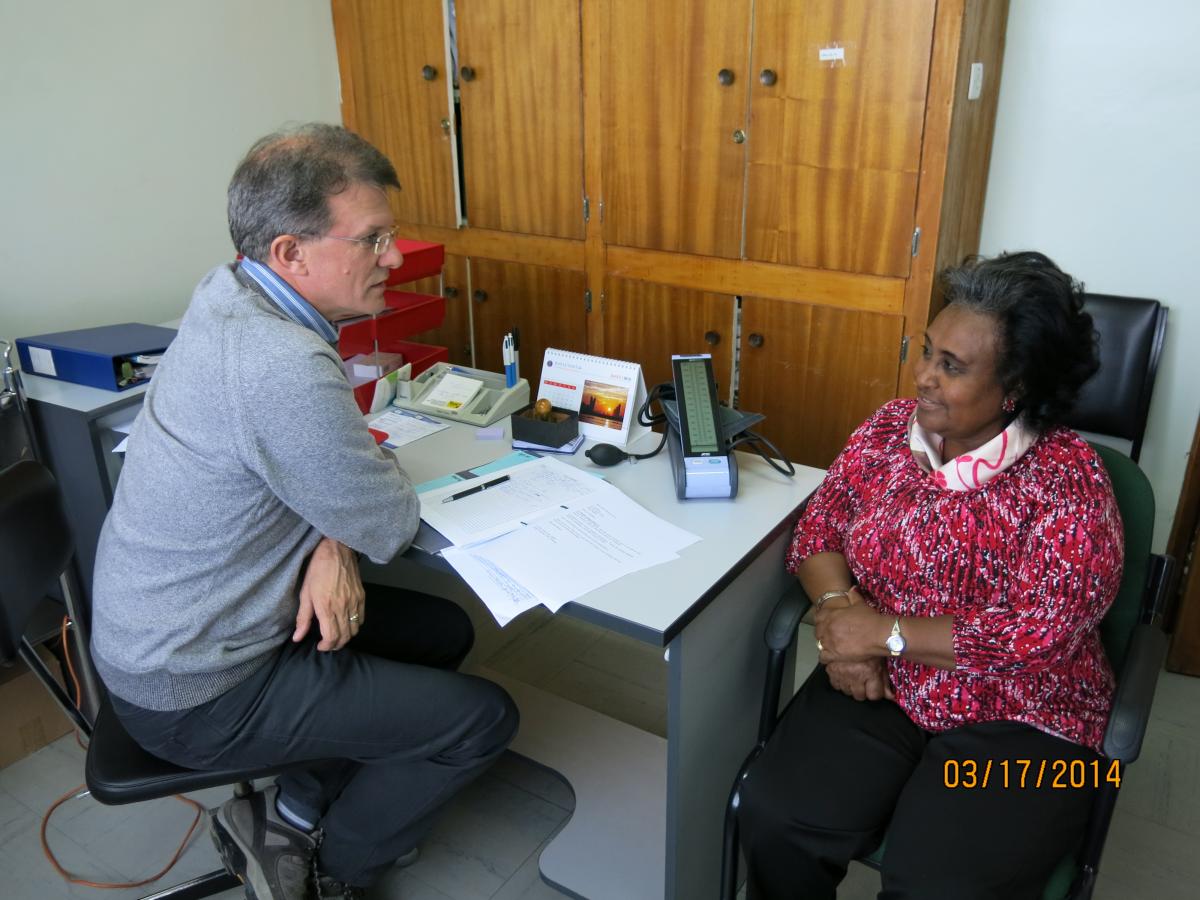 One lady in her 50s has been seeing me for several reasons, including difficulty seeing and hearing. She is seriously deaf from ear damage many years ago. My staff and I have found a way to get her a hearing aid paid for (she couldn’t afford it), some glasses, and investigation and medication for her other symptoms. She’s gone from being very sad and locked in her own world to being smiley, happy and exceedingly thankful to God for his goodness.
So it’s all worth it.
Comments
Paul G (not verified)
Mon, 14/04/2014 - 17:00
Permalink
Now that's what I call analytical
Great stuff and very thought (and prayer) provoking! Keep up the good work and keep smiling.
Rachel Jefferies (not verified)
Tue, 15/04/2014 - 11:23
Permalink
The wonders of placebo
Thanks Phil & Chris, I've really enjoyed reading both your blog posts.
When I was in Zambia I too got fairly tired by both the constant requests for a pill to fix everything and my inability to explain viral, self-limiting illnesses. I was nosing around the depths of pharmacy one day and found a whole shelf of 'B-vite' or something similar, they only had 3 months before they expired so they became my pill of choice for all my patients with illness which would self resolve without medication, I wonder if there's something similar you could find there?
Over here (a particularly hippie part of Australia) I'm more likely to be frustrated by my patients' cry of 'but my kinesthesiologist/ naturopath/ herbalist/ iridolgist/ homepath/ reflexologist said my adrenals/ liver/ cortisol/ pituitary is out of balance'.
Oh and they definitely wouldn't take any of those nasty chemical medicines I might prescribe!
Rachel
John kirkham (not verified)
Wed, 16/04/2014 - 22:07
Permalink
Consultation skills Ethiopian style
I am sure Neighbour and Pendleton would be tearing their hair out.
At least you don't have to deal with too much Cyberchondria
Regarding age, I remember in Liberia as a 5th year student asking patients how tall they were when the President came to power!
Sounds like the basis for a BMJ or JRCGP article?
Keep ICEing!
Aaron (not verified)
Tue, 22/04/2014 - 09:45
Permalink
Really interesting
Hi Dad,
It is a really interesting observation about the politeness in combination with wanting something to fix things now! I never really thought that reading people as they left the room was a way of judging how successful the consultation went, but now you mention it, it would be exactly how I would do it. I hear so many people down this end complaining about doctors/medical care, sounds like some time in America would do them good :) The gloves comment made me laugh, thank you!
Stef (not verified)
Mon, 05/05/2014 - 00:20
Permalink
Depression
I love your blog!
thanks be im working in familiar uk : though the eastern european expectation of instant investigations and rx sounds american !
How do they present with depression? i still wonder if "too much pain" in british asians is sometimes vit d deficiency ? Do they stop praising god?
Phil
Mon, 05/05/2014 - 15:23
Permalink
Thanks Stef
Great to hear from you! I do see depression but it is shrouded in physical symptoms. Whole body pain is a regular occurrence. As I work in a Christian organisation praising God is very common, but "Praise God" is a frequent phrase in the wider Ethiopian world as well. It tends to be part of a standard greeting. The "spiritualisation" of physical problems is another challenge I face regularly. I hope HVCCG is behaving itself.
Mandy Evans (not verified)
Mon, 05/05/2014 - 13:56
Permalink
Hello
Hello,
Just wanted to let you know that I look forward to reading your blogs, sometimes with a laugh, sometimes with concern and always with a feeling of humbleness for the comparative luxury that we enjoy in the UK.
Mandy x
James (not verified)
Tue, 06/05/2014 - 09:39
Permalink
'borrowing' this for future reference
This post has just become a case study for our health and social care students to study as part of their course next year. Just thought you would like to know - your words reach my colleagues and students pretty often!