The Shopping Experience
Supermarkets (think little independent places in small seaside towns in Britain) require a vehicle to reach them. I needed a few items so I shared a friend's regular taxi. The taxi was 40 years old and the driver looked double that. There was a wooden bench seat at the back and I slid in along with two Ethiopian ladies. The back doors just had a couple of ratchet stubs where the door handle and the window winder should have been, and our driver produced a winder from the glove box and leaned over to close the door and the window. Then began a drive akin to any dodgem car ride I have ever experienced. The steering was so loose he needed to move the wheel from side to side simply to maintain an approximately straight direction. When we reached the ring road he cut the engine and we coasted downhill to the next roundabout. Uphill was a different story with the engine coughing and spluttering. The passengers and driver were instinctively leaning forward as the car struggled along slower than walking pace.
We arrived safely at "Save More" supermarket. 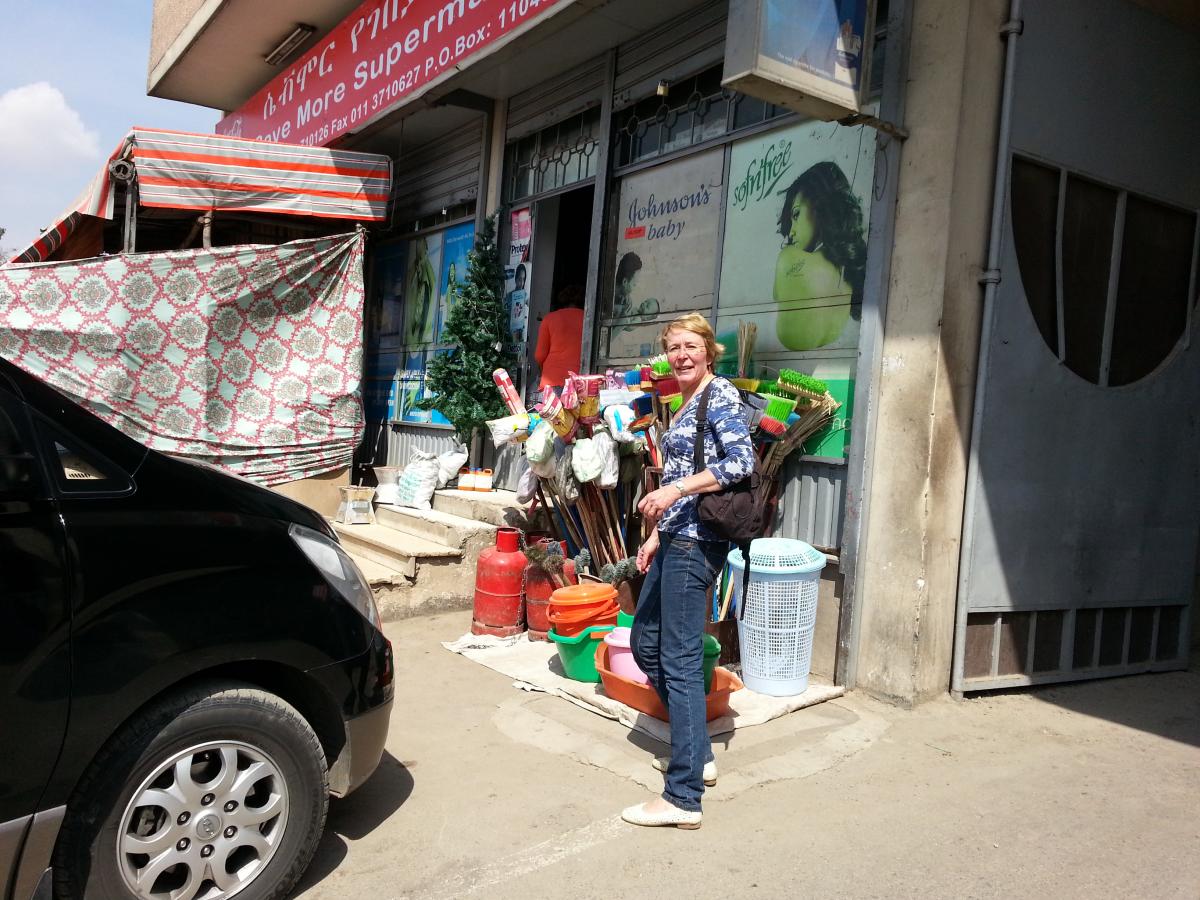 I wandered along the narrow aisles between the tightly packed shelves and selected some green coffee beans - a gift for an Ethiopian - and also two large bottles of water. The latter were rather heavy so spotting a pile of red plastic baskets on the floor identical to those at the entrance, I placed my goods in one and proceeded to the checkout. It is never entirely clear what is being entered or calculated on ancient tills and receipt printers without covers but I was slightly surprised by the total, which I paid. We returned to the taxi and an assistant came running out asking to see the bill. It transpired that they sell the same plastic baskets as those they provide for customers' use and I had inadvertently picked up one that could be purchased so they had sold me both the goods and the shopping basket.
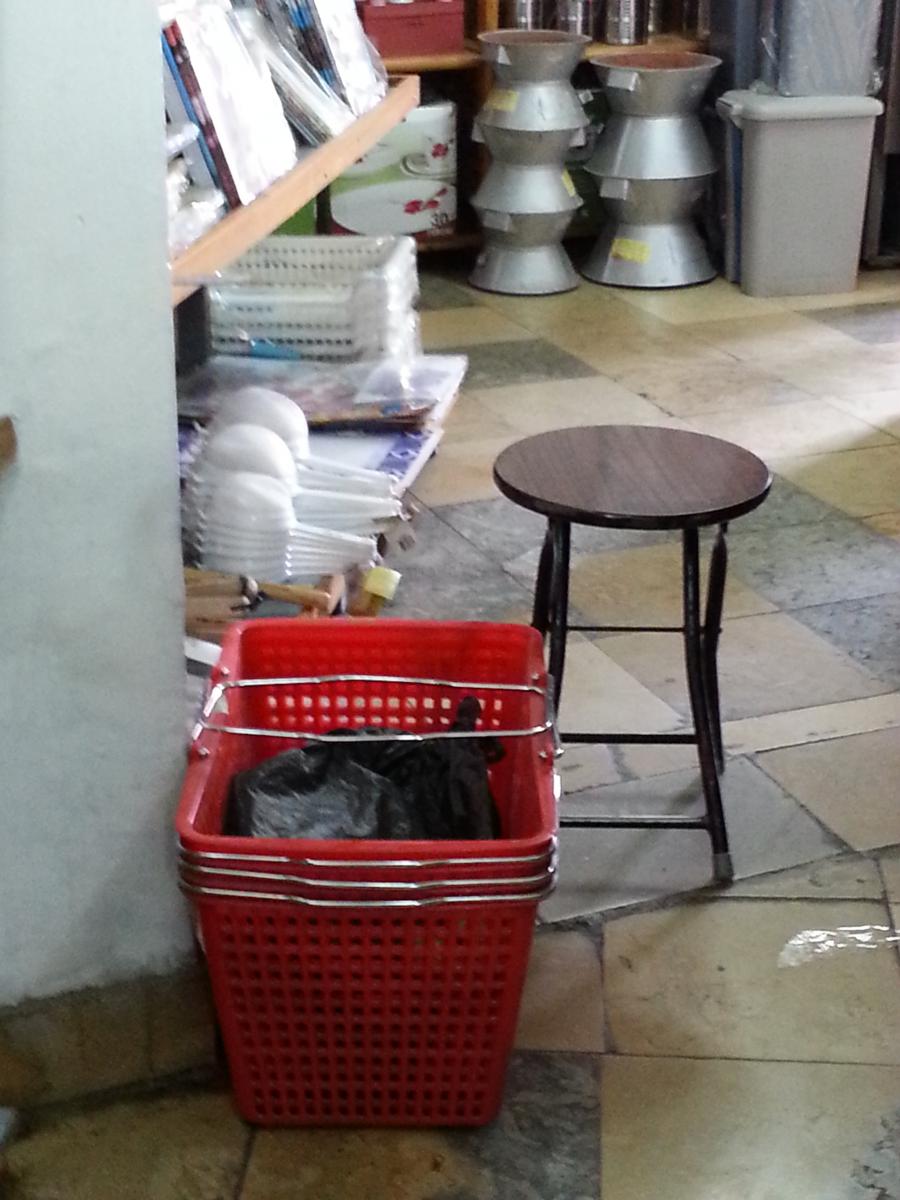 I now have a credit note (or rather something written on my receipt) to use next time I shop there because a refund was technologically impossible it would appear.
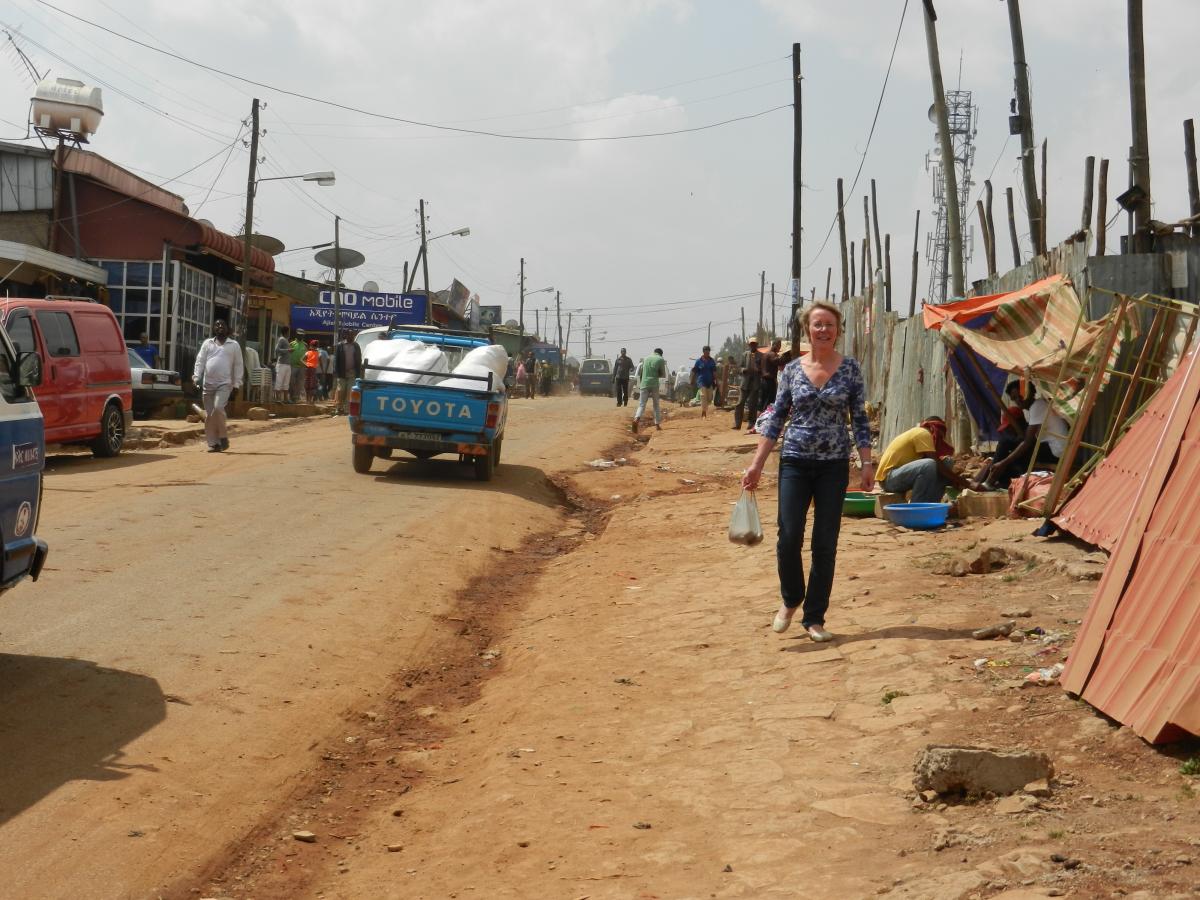
The alternative is shopping locally. On one occasion I went out with Sebelah, our Ethiopian house worker. The road outside Bingham was thronging with people and taxis, and the ground I was walking on was very uneven and covered in unidentifiable rubbish of various kinds. There was a distinctive smell (diesel fumes mixed with others).I was the only white face.
I mentioned I needed to buy something for our church service because people were donating items to be given to those in need. We found a shack selling blankets and Sebelah pulled one out to check the quality. The stall holder spotted that she was with me, a foreigner, so up went the price. 400 birr (£12.76) he stated confidently. To Sebelah this was ridiculously expensive. She tried to negotiate but he wouldn't compromise so she folded the blanket and handed it back. Not to be deterred she asked around and took me into a cramped warehouse where there were African skirts and blankets stacked in precarious piles and many people passing through. We had agreed that I would hang back, and as a result Sebelah negotiated a price of 175 birr (£5.59).
Needing some plasters we found two small pharmacies and so we entered one. I explained (by gesture) what I wanted and the shopkeeper brought out a strip of six from under the counter. I bought two for 8 birr (27p). They were wrapped carefully in a small square of pre-torn newspaper and secured with tape.
 Sebelah met a girl of about seventeen carrying two full jerry cans of water - they looked heavy. She greeted the girl warmly. "She is my neighbour" Sebelah explained, "she carry water". I discovered that in Sebelah's neighbourhood (about 20 minutes’ walk away uphill) they have had problems with water for weeks and only receive it at weekends. This is blamed on the extensive road works taking place across the city.
We’ve had some trouble finding sugar. Sebelah pointed out the best places to buy fruit and vegetables, bread and eggs. We stopped at several shacks and asked for sugar to no avail. "We get it from Government place" Sebelah suggested. There was a gap in the corrugated iron fencing. We passed through onto a mud track with cobbles at intervals, and there was a shaded entrance to a small warehouse. The doors were ajar and inside I spotted sacks of sugar and flour piled high - some had been decanted into flimsy bags and were on the concrete floor. I handed Sebelah the money and she purchased 2 kg for me through a window to the left, covered by a rusty metal grill.
We could have purchased fabric. All the primary colours were represented; many with a sheen or metallic thread running through. Milk is sold in small plastic bags. Or we could have bought any number of trainers or replica football shirts (Chelsea being the most popular).
Wherever you choose to shop here you are almost always guaranteed a unique experience.
Comments
Bethany (not verified)
Sat, 28/12/2013 - 21:22
Permalink
Shopping
Nothing quite like shopping in the market, how exciting. I loved the descriptions of your observations..I have a pretty good idea of what the market looks like. When I was in Malawi, it was my favourite time, going to the market, because of the sheer randomness of what was on sale and what would happen during the trip! xxx
Paul (not verified)
Sun, 29/12/2013 - 13:10
Permalink
the white man always pays
the white man always pays more. Knowing the language in Madagascar we always used to evesdrop when locals were buying produce and then step in right after and say 'I want that at the price he/she just paid". If they tried to rip us off, we would know it and most times they didn't expect us to be able to understand them and it would often make them laugh when we caught them out. You'll get the hang of it but until then you're a bit stuck!